
Three days cover the essentials; with four you can slow down or escape to Tivoli or Ostia Antica. The Colosseum and the Vatican Museums work with timed tickets that sell out in high season, so book before you travel.
What to see in Rome: top sights
The Colosseum

The largest amphitheatre of the Roman Empire, opened in AD 80, where gladiators fought before 50,000 spectators. Special tickets let you go down to the underground chambers or step onto the arena floor.
Recommended time: 1.5–2 h
Tip: Timed tickets include the Forum and the Palatine and sell out in high season. Guided tours often give access to areas closed to general visitors.
Hotels near The Colosseum · 2,263 propertiesRoman Forum and Palatine Hill

The political heart of ancient Rome: temples, triumphal arches, the Via Sacra and the Senate House. On the Palatine Hill, where legend says the city was founded, are the remains of the imperial palaces and superb views over the Forum.
Recommended time: 2–3 h
Tip: Bring water and a hat: there is almost no shade.
Hotels near Roman Forum and Palatine Hill · 2,319 propertiesVatican Museums and Sistine Chapel
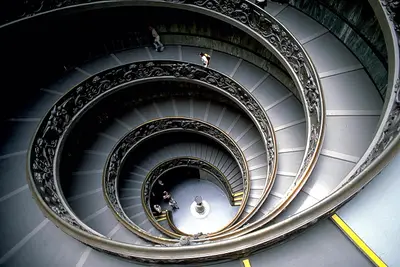
One of the world’s greatest art collections: the Raphael Rooms, the Gallery of Maps, the Laocoön and, at the end of the route, the Sistine Chapel with Michelangelo’s ceiling and Last Judgement.
Recommended time: 3–4 h
Tip: Book a timed ticket, go first thing and remember they close on Sundays, except the last Sunday of the month, when entry is free and the crowds are huge.
Hotels near Vatican Museums and Sistine Chapel · 1,282 propertiesSt Peter’s Basilica

The largest church in Christendom, with Michelangelo’s Pietà, Bernini’s baldachin and a dome you can climb for views over the square and all of Rome.
Recommended time: 1.5–2 h
Tip: Entry to the basilica is free; the dome climb is paid. Shoulders and knees must be covered.
The Pantheon
Hotels near The Pantheon · 2,231 properties
The best-preserved Roman building, almost two thousand years old: a temple turned church whose concrete dome, with its oculus open to the sky, is still the largest unreinforced dome in the world.
Recommended time: 45 min
Trevi Fountain
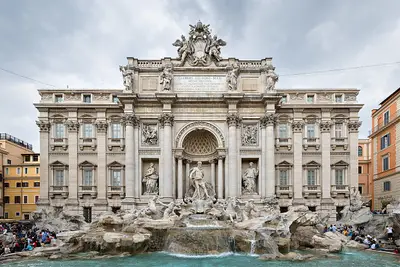
The world’s most famous Baroque fountain, star of La Dolce Vita. Tradition says that if you toss a coin over your shoulder, you will return to Rome.
Recommended time: 30 min
Tip: Go very early or late at night to see it with fewer people.
Hotels near Trevi Fountain · 2,548 propertiesPiazza Navona
Hotels near Piazza Navona · 2,147 properties
The quintessential Baroque square, built on an ancient stadium, with Bernini’s Fountain of the Four Rivers facing Borromini’s church of Sant’Agnese.
Recommended time: 30 min
Piazza di Spagna and the Spanish Steps

The steps up to Trinità dei Monti, the Barcaccia fountain and, all around, Via Condotti and the streets of the great fashion houses. From the top there is a lovely view over the rooftops.
Recommended time: 30 min–1 h
Tip: Sitting on the steps is forbidden and fined.
Hotels near Piazza di Spagna and the Spanish Steps · 2,463 propertiesTrastevere
Hotels near Trastevere · 472 properties
The neighbourhood across the Tiber, with cobbled streets, ivy-covered façades, the basilica of Santa Maria in Trastevere and its golden mosaics, and the liveliest trattorie in the city at night.
Recommended time: 2–3 h
Borghese Gallery
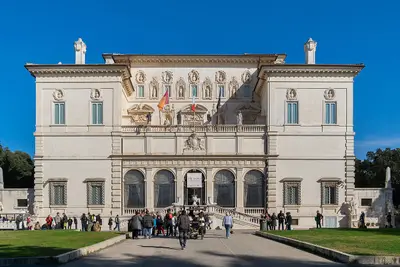
In a villa inside Rome’s loveliest park, the Borghese collection brings together Bernini sculptures such as Apollo and Daphne and paintings by Caravaggio, Raphael and Titian.
Recommended time: 2 h
Tip: Booking is mandatory and visits run in two-hour slots with limited capacity.
Hotels near Borghese Gallery · 1,577 properties


Day trips from Rome
Pompeii
About 2 h 30 min by high-speed and regional train
The Roman city buried by Vesuvius in AD 79: streets, frescoed houses, baths and a forum frozen in time. It is a long trip; many tours add the Amalfi Coast or Vesuvius.
Tivoli
About 1 h by bus or train
Two UNESCO-listed villas: Villa d’Este, with hundreds of Renaissance fountains, and Villa Adriana, Emperor Hadrian’s immense country palace.
Ostia Antica
About 40 min by train
Ancient Rome’s port, a nearby and peaceful Pompeii, with a theatre, baths, shops and mosaics among the pine trees.
Florence
About 1 h 30 min by high-speed train
The cradle of the Renaissance is just over an hour away: you can see the essentials in a day, although it deserves more.
Orvieto
About 1 h 15 min by train
A hilltop town on a tufa cliff, with a cathedral with a dazzling façade and an underground city dug beneath the houses.
Rome in 3 days
Day 1
The Colosseum first thing, then the Roman Forum and the Palatine. In the afternoon, climb the Capitoline Hill and walk down to Piazza Venezia. Dinner in Monti.
Day 2
The Vatican Museums and Sistine Chapel first thing, St Peter’s Basilica and a walk to Castel Sant’Angelo. In the evening, cross the Tiber for dinner in Trastevere.
Day 3
The historic centre on foot: the Pantheon, Piazza Navona, the Trevi Fountain and the Spanish Steps. In the afternoon, the Borghese Gallery with a booking and a walk through the Villa Borghese gardens to the Pincio for sunset.
Rome with kids
- A gladiator class, where they learn the history of the Colosseum through play.
- Explora, Rome’s children’s museum, and the Bioparco zoo in Villa Borghese.
- Renting bikes or a pedal car in Villa Borghese.
- A family pizza or pasta-making class.
Free things to do in Rome
- St Peter’s Basilica (without the dome) and Bernini’s square.
- The Vatican Museums on the last Sunday of the month.
- State museums and monuments, including the Colosseum, on the first Sunday of the month (booking is advisable).
- The Trevi Fountain, Piazza Navona and the Spanish Steps.
- Sunset from the Janiculum or the Pincio, and the Aventine keyhole, which frames the dome of St Peter’s.
Where to stay in Rome
Central Rome is best explored on foot and the metro has few lines, so where you stay matters a lot.
Historic centre
Between the Pantheon, Navona and Trevi: everything within walking distance, though noisier and more expensive.
Places to stay in Historic centre · 2,231 propertiesMonti
Next to the Colosseum and the Forum, a neighbourhood with shops, wine bars and a local feel. A great choice.
Places to stay in Monti · 1,577 propertiesTrastevere
Full of charm with the best nightlife, across the river. A little far from the metro.
Places to stay in Trastevere · 472 propertiesPrati
Elegant and quiet, next to the Vatican and well connected by metro. Ideal for families.
Places to stay in Prati · 1,233 properties
When to go to Rome
April, May, June, September and October are the best months: pleasant temperatures and long days. Easter and Christmas draw huge crowds to the Vatican.
July and August are very hot and busy; August is also when Romans go on holiday and some restaurants close. Winter is mild and a good time for museums.
Book activities in Rome
Tours, tickets and day trips with live availability and prices.
Activities from an external partner, which may use its own cookies. These are affiliate links: if you book, we may earn a commission at no cost to you. Cookie policy
Frequently asked questions about Rome
Do I need to book the Colosseum in advance?
Yes. Tickets have fixed time slots, include the Forum and the Palatine, and sell out in high season. Guided tours can also take you into the underground chambers or onto the arena.
Are the Vatican Museums open on Sundays?
No, except on the last Sunday of each month, when entry is free and the queues are very long. It is better to book another day and arrive first thing.
Is there a dress code at the Vatican?
Yes: shoulders and knees must be covered in St Peter’s Basilica and in churches. A scarf in your bag solves the problem in summer.
How many days do you need in Rome?
Three days let you see ancient Rome, the Vatican and the historic centre. With four or five you can slow down and add Tivoli, Ostia Antica or Pompeii.
What is the best area to stay in Rome?
The historic centre and Monti to get around on foot; Trastevere for nightlife; Prati to be next to the Vatican and somewhere quieter.
Guide written by the buiigo team · Updated October 8, 2026
Photo credits
Rome: Anil Öztas, CC BY 4.0 · The Colosseum: Diliff, CC BY-SA 2.5 · Roman Forum and Palatine Hill: Giovanni Dore, CC BY 3.0 · Vatican Museums and Sistine Chapel: Andreas Tille, CC BY-SA 4.0 · St Peter’s Basilica: Alvesgaspar, CC BY-SA 4.0 · The Pantheon: Rabax63, CC BY-SA 4.0 · Trevi Fountain: Diliff, CC BY 3.0 · Piazza Navona: Krzysztof Golik, CC BY-SA 4.0 · Piazza di Spagna and the Spanish Steps: Figure, CC BY-SA 3.0 · Trastevere: Krzysztof Golik, CC BY-SA 4.0 · Borghese Gallery: Krzysztof Golik, CC BY-SA 4.0


